What a Weekly Pool Service Visit Actually Covers
Knowing what belongs on the weekly checklist helps you judge any pool service, and shows why the visits matter in Brevard.
October 21, 2026 · 4 min read
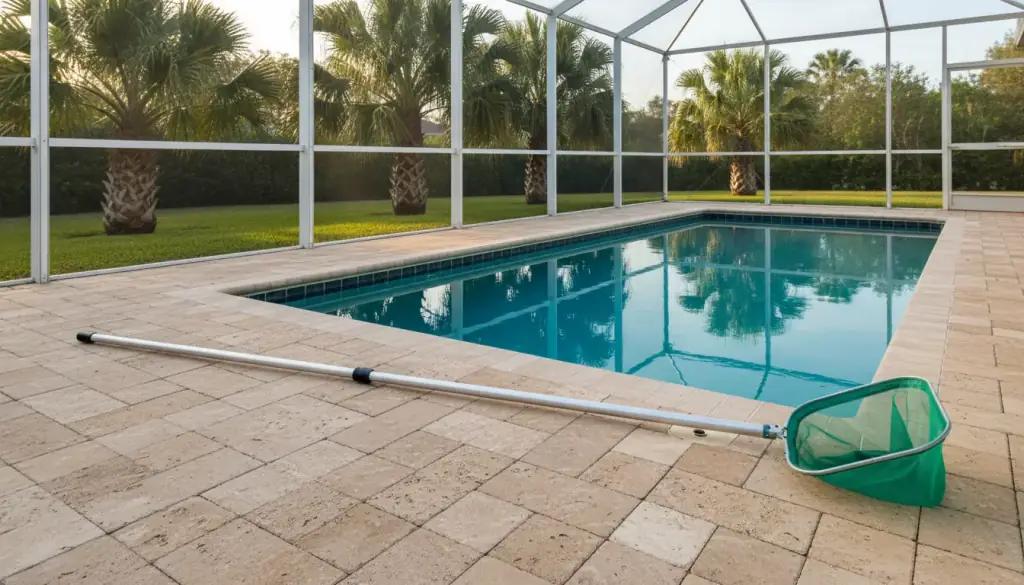
Plenty of homeowners pay for weekly pool service and couldn't tell you exactly what happens during the visit. They see a truck at the curb, a clear pool afterward, and that's about it. Knowing what's on the checklist helps you spot a service that's skipping steps, and it explains why a weekly visit makes such a difference in a place where pools want to turn green.
The weekly checklist, step by step
Native Pools of Brevard publishes its weekly service checklist. Here it is as written:
- Vacuuming and netting the entire pool
- Brushing of all pool walls, steps, and tiles
- Circulation maintenance, such as cleaning the pool skimmer, pump baskets, and filters
- Checking all equipment is functioning properly, such as pumps, timer, pressure, etc.
- Cleaning the pool sweep bag and filter, wall screens, etc.
- Testing of pool water, adding any necessary chemicals to balance the water
That list looks simple on paper. Each line is doing real work, so it's worth going through what it protects you from.
Why the hands-on work comes first
Vacuuming and netting remove what's on the surface and what's settled on the floor. Leaves, pollen and bugs don't just sit there. They break down, feed algae and use up chlorine, which is why a pool with a heavy leaf load under the screen cage can slip out of balance even when the chemistry was right a few days earlier.
Brushing the walls, steps and tile is the step people underestimate. Algae doesn't start as green water. It starts as a film anchored to the plaster, usually in the corners, behind ladders and on the steps where water moves least. Brushing breaks that grip and puts the growth back in the water where the sanitizer can reach it. A pool that gets brushed every week rarely reaches the stage where you can see a problem.
Circulation and equipment checks
The skimmer basket and pump basket catch debris before it reaches the pump. When they're full, the pump pulls less water, the motor works harder, and circulation drops. Cleaning them every visit keeps water moving through the filter, and the filter check keeps that filter from clogging up and choking the system.
Then there's the equipment itself: pumps, timer, pressure and so on. A timer that drifted or got reset after a power flicker is one of the quieter reasons pools go green, because nobody notices until the water changes. A pressure reading that creeps up points to a dirty filter. A strange noise from a pump is easier and cheaper to deal with early than after it fails. Their list names inspection and repairs on a regular basis as one of the benefits of weekly service, and this is where that happens.
If your pool has an automatic cleaner, the sweep bag and wall screens are on the list too. A packed bag stops a cleaner from picking anything up, so the pool looks like it's being cleaned while the debris stays put.
Testing the water, and what's included
The last item is the test. Chlorine burns off in strong sun, rain thins it out, and swimmers and debris use it up, so the numbers move every week. Testing tells the technician what's changed, and adding only what the water needs keeps it balanced instead of swinging back and forth.
Native Pools of Brevard states that all cleaning products and maintenance chemicals are included. For you, that means no jugs to haul home from the store and no guessing at what to add between visits.
Weekly or monthly
Native Pools of Brevard lists both weekly cleaning and monthly cleaning, and it also mentions long-term and short-term service. The right schedule depends on the pool, how much it gets used, how much debris falls into it and how much you're willing to do yourself in between. A pool under a heavy tree canopy or one that gets a lot of use leans toward weekly. A pool that's barely used might suit something lighter. The honest way to decide is to have someone look at it.
You don't have to stand in the yard to check whether a visit happened. The baskets should be empty and the water should look and feel clean. The steps and tile line should be free of film. The equipment should be running the way you left it, and a good service will tell you when it notices something that needs attention. If you never hear anything and the pool still drifts, ask what the technician is testing and finding each week.
If you'd like to see how this works on your pool, Native Pools of Brevard offers a free weekly service estimate, a pool water evaluation and a chemical balance test. They explain the condition of the water and any treatments needed, then give you a no obligation quote for pool and spa maintenance. Call (321) 446-6242, Monday to Thursday 8am to 5pm or Friday 8am to 3pm.
Native Pools of Brevard, 321-446-6242
Call 321-446-6242More articles
Why Brevard Pools Turn Green, and What Recovery Involves
Green water usually has a short list of causes, and knowing them makes the next one easier to prevent.
Reading Your Pool Water: Slime, Odor, Cloudiness and pH
Your pool tells you when something's off, and the signs show up well before the water turns green.