Reading Your Pool Water: Slime, Odor, Cloudiness and pH
Your pool tells you when something's off, and the signs show up well before the water turns green.
October 21, 2026 · 3 min read
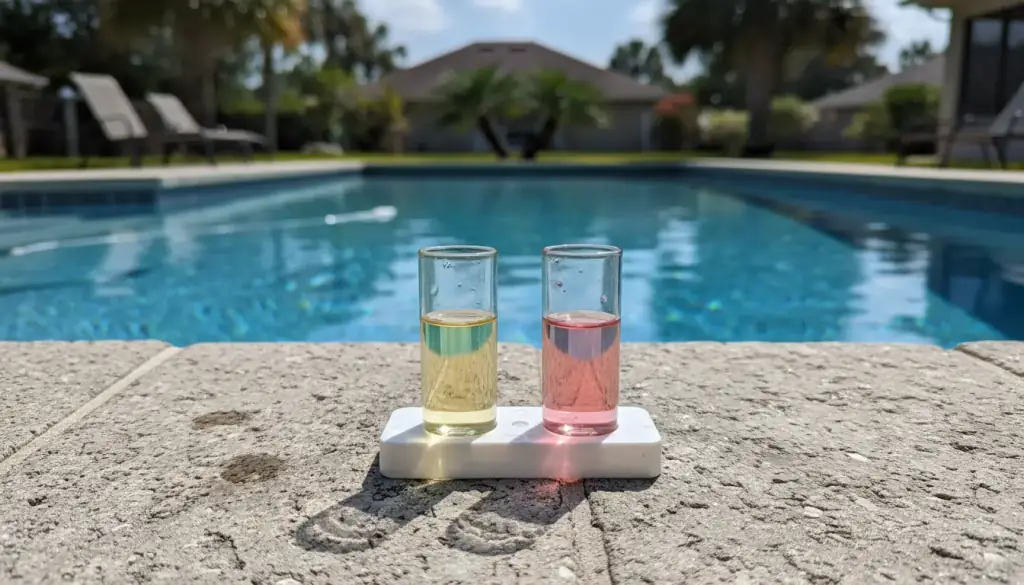
You don't need a test kit to know something's wrong with a pool. Your hands, your nose and your eyes will tell you first. A slick floor, a strange smell or water that has lost its sparkle are all early warnings, and catching them early is the difference between a quick fix and a full recovery. Native Pools of Brevard puts it simply on its services page: healthy pH levels are necessary to keep your pool safe, and a slimy floor and funny odor are signs of needed maintenance.
A slimy floor
If the bottom of the pool feels slick under your feet, or the steps have a film you can wipe off with a hand, that's biological growth taking hold. It usually means algae, and sometimes bacteria living in the same film. At this stage the water often still looks clear, which is why people ignore it.
Slime is the stage to deal with, because it's the stage before green. The growth is anchored to the surface, so it needs brushing and a proper sanitizer level to break it up. Waiting until the water turns color means the same problem, only bigger. Corners, steps and shady spots usually go first.
A funny smell
Here's one that surprises people: a strong chlorine smell around a pool usually doesn't mean there's too much chlorine. It's more often a sign that the chlorine has been used up reacting with sweat, sunscreen, body oils and other organic matter, leaving behind compounds that smell sharp and sting eyes. A pool that's clean and properly sanitized has very little smell at all.
Other odors point somewhere else. A musty or swampy smell suggests algae or stagnant water. Either way, the smell is telling you the water isn't doing its job, and shocking it blindly isn't always the answer. It helps to test first so the treatment fits what's actually wrong.
Cloudy water
Cloudiness has a few causes, and they overlap. Tiny particles that the filter isn't catching, sanitizer that's too low, a pH that's drifted out of range, and a filter that needs cleaning can all produce the same milky look. After a big summer storm, cloudy water is common because rain thins the chlorine and washes debris in.
Clouded water should be taken seriously because you can't see the floor clearly through it, and that makes it harder to see a swimmer in trouble. It's also usually one step away from green. If the water is cloudy and the filter's pressure is high, the filter is the place to start.
What pH does, in plain terms
pH measures how acidic or basic the water is. Think of it as the setting that decides how well everything else in the pool works. When pH is in a healthy range, chlorine does its job, swimmers' eyes and skin are comfortable, and the pool surfaces and equipment last. When it drifts, the problems pile up.
If pH runs too low, the water turns acidic. Eyes and skin sting, metal parts in the system can corrode and plaster can etch. If it runs too high, chlorine becomes less effective, so algae gets an easier path. Scale can also form on tile and inside equipment, and the water may go cloudy. Neither extreme is something you want to leave, and both can happen quietly because the water can look fine while the balance is off.
Rain, heat, swimmers and the chemicals themselves all push pH around, which is why a one-time adjustment doesn't hold. It needs checking regularly. Native Pools of Brevard describes itself as expert on water balance and filtration, making the pool or spa safe for everyone entering it, and a regular test is where that starts.
What to do when you notice a sign
- Brush the area that feels slick and clean the skimmer and pump baskets, since debris sitting in them makes everything worse.
- Check that the pump is running its normal hours and look at the filter pressure gauge.
- Get the water tested before you add anything. Guessing with chemicals often makes cloudy water worse or burns through product that wasn't needed.
If you'd rather hand it off, Native Pools of Brevard offers a free pool water evaluation and chemical balance test. They explain the condition of your water, tell you about any treatments needed and give you a no obligation maintenance quote. Call (321) 446-6242 and describe what you're seeing.
Native Pools of Brevard, 321-446-6242
Call 321-446-6242More articles
Why Brevard Pools Turn Green, and What Recovery Involves
Green water usually has a short list of causes, and knowing them makes the next one easier to prevent.
What a Weekly Pool Service Visit Actually Covers
Knowing what belongs on the weekly checklist helps you judge any pool service, and shows why the visits matter in Brevard.