Pool Filters: Cartridge Cleaning, Backwashing and Rising Pressure
Your filter does most of the work in keeping water clear, and it can only do that job when it's clean.
October 21, 2026 · 3 min read
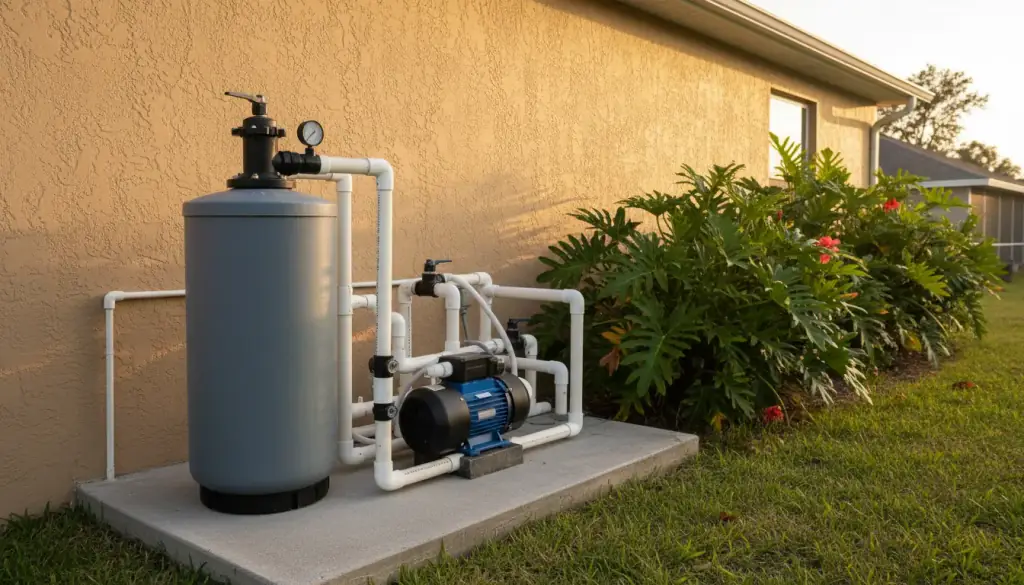
The filter is the least glamorous part of a pool and probably the hardest working. Every gallon of water goes through it over and over, and everything the skimmer picks up ends up there. When it clogs, the pool tells you with cloudy water, weak flow from the returns and a pump that sounds like it's struggling. Most owners never look at it until one of those things happens.
What the filter actually does
Water leaves the pool through the skimmer and main drain, goes through the pump, then passes through the filter, which traps fine particles before the water returns. Sanitizer kills what's alive in the water, and the filter removes what's left over: dead algae, pollen, dust, and the tiny stuff that makes water look dull. Without a clean filter, the water can be well balanced and still look cloudy.
Over time, trapped material builds up and the filter has to work harder to pass the same amount of water. That's the point where cleaning matters.
Cartridge cleaning versus backwashing
There are a few common filter types, and the way you clean them depends on which one you have.
A cartridge filter uses a pleated element, a bit like an oversized car air filter. It can't be backwashed. Cleaning it means taking the element out and rinsing it thoroughly, working a hose between each pleat to flush out what's trapped. Heavily soiled cartridges sometimes need a soak in a cleaner made for them. Cartridges wear out eventually, and a worn one stops trapping fine material properly.
Sand and diatomaceous earth (DE) filters work differently, and they're cleaned by backwashing. That means reversing the flow of water through the filter so it flushes the trapped dirt out through a waste line. A DE filter then needs fresh powder added back. Backwashing too often wastes water, and not often enough lets the filter clog, so timing matters. A sand filter's media also needs replacing after several years.
Native Pools of Brevard lists both filter cleaning and filter backwashing as services, which covers whichever type is sitting on your equipment pad. The weekly service checklist also includes cleaning the filters as part of circulation maintenance.
Reading the pressure gauge
Almost every filter has a pressure gauge on top. It's the quickest way to tell how the filter's doing, and you don't need to know anything technical to use it. The trick is to note the reading right after the filter is cleaned and the pump is running normally. That's your clean baseline.
As the filter loads up with debris, the reading climbs. A noticeable rise above the clean baseline is the usual sign it's time to clean. Many owners write the baseline number on the tank with a marker so it's easy to compare. If the pressure reads very low, that points the other way: something blocking flow before the filter, such as full baskets or a clogged line.
Signs the filter is the problem
- Pressure that keeps creeping up between cleanings.
- Weak flow from the return jets in the pool, where the water used to push out strongly.
- Water that stays cloudy even though the chemistry tests fine.
- A pump that sounds louder or strained.
Any one of these can have another cause. Together, they're a good reason to open the filter up and have a look.
Why a clean filter saves energy
When the filter is clogged, the pump has to push harder against the resistance to move the same water. That means more strain on the motor and more electricity used, and it shortens the life of the equipment. A clean filter lets water pass freely, so the pump runs the way it was designed to.
Native Pools of Brevard lists this as one of the benefits of regular service: keeping filters and other equipment running smoothly, saving energy in the long run. In a state where the pump runs many hours a day for most of the year, small efficiency gains add up.
There's no single cleaning schedule that fits every pool. A pool under a screen cage with a lot of leaf fall, or one that just went through a green recovery, loads the filter much faster than a lightly used one. That's why the pressure gauge is a better guide than the calendar.
If your gauge has been climbing or the water won't clear, Native Pools of Brevard can clean or backwash the filter and check the rest of the circulation system while they're there. Call (321) 446-6242 for a free estimate.
Native Pools of Brevard, 321-446-6242
Call 321-446-6242More articles
Why Brevard Pools Turn Green, and What Recovery Involves
Green water usually has a short list of causes, and knowing them makes the next one easier to prevent.
What a Weekly Pool Service Visit Actually Covers
Knowing what belongs on the weekly checklist helps you judge any pool service, and shows why the visits matter in Brevard.